
Total War: EMPIRE
Feral InteractiveStrategy
4.3334.00 Reviews
- Version
- 1.7.1RC1
- Installs
- 50.00K
- Age Rating
- Teen
Screenshots
Our Review of Total War: EMPIRE
 Analysis by Appyee
I judge Total War: EMPIRE by how well it turns grand ambitions into decisions that matter, and its strongest idea is the contrast between a broad campaign and battles that demand close attention. It can make a quiet turn of trade and diplomacy feel as consequential as a cannon exchange. That scale is compelling, but it also asks for patience: this is a strategy game to settle into, not a quick diversion.
A campaign where small choices accumulate
The appeal is not simply that you command armies. You are also responsible for the conditions that let those armies keep operating. A campaign decision can affect several parts of your position, so I find it more useful to think in priorities than to try to improve everything at once. If money is tight, for example, expanding militarily without a plan for the cost can leave you with less freedom when another problem appears. The satisfying part is seeing a chain of sensible choices pay off; the danger is discovering that a neglected concern has become a crisis.
That makes the campaign a good fit for players who enjoy planning several turns ahead and revising a plan when circumstances change. It is less suited to someone who wants every action to produce an immediate, uncomplicated reward. I would approach a first campaign as a chance to learn how its different pressures interact, rather than treating every setback as a sign that the whole run is lost.
Making battles work for you
The tactical side rewards attention to the shape of a fight, not just the size of your force. Before committing troops, I would look at the ground and consider whether the formation can hold together as it moves. A line that looks strong on paper may be exposed if it is stretched too far, while a patient defensive position can buy time to respond to an opponent’s movement. These are useful habits because they give you choices beyond sending units forward and hoping numbers settle the matter.
A practical way to learn is to give yourself one clear objective in each engagement: protect a vulnerable side, hold a useful position, or create an opening for a flank. Trying to micromanage every part of a large battle from the beginning can make the experience feel busier than it needs to be. I get more from watching how one decision changes the rest of the field, then applying that lesson next time. The trade-off is that battles may ask for more sustained focus than a casual player expects.
Feral Interactive developed this strategy game, and the mobile release makes a substantial campaign experience available on a device you can use away from a desk. That convenience does not turn it into a lightweight game. I would choose a moment when I can concentrate, rather than opening it for a few distracted minutes and expecting to make good decisions amid interruptions.
Where it sits among strategy games
Compared with simpler mobile strategy games built around short rounds or a narrow set of upgrades, this one is more about coordinating different responsibilities over time. Its appeal comes from the combination of campaign-level choices and real-time command, rather than from a single battle mechanic or a quick competitive loop. That breadth makes it a stronger choice for players who want to inhabit a historical power and shape its fortunes, but a weaker choice for anyone mainly seeking fast matches or a low-effort way to pass a few minutes.
It also asks for a different kind of attention from a compact turn-based tactics game. Instead of focusing only on the next encounter, you have to think about what your position will look like after the encounter is over. I like that long view, but it is a real preference rather than an automatic advantage: if you enjoy tightly bounded missions more than open-ended management, a smaller-scale tactics game may suit you better.
Who should make room for it
I would recommend it to players who enjoy historical settings, careful preparation, and the feeling that military choices sit inside a wider political and economic situation. It is especially appealing if you like learning a system by experimenting, then returning to a campaign with a better sense of what to protect and when to take a risk. The combination gives each session room for both patient planning and moments of immediate pressure.
I would be more cautious about recommending it to a newcomer who dislikes layered menus or to someone who wants a strategy game that explains every consequence before a decision is made. The learning curve is part of the experience. A useful approach is to take one concern at a time—first understanding how your campaign is holding together, then looking for opportunities to expand—rather than trying to master diplomacy, trade, technology, and battlefield command all at once.
For a realistic everyday session, I might start a campaign after dinner, take a few turns to review the state of my territories, and decide whether the next priority is stability or a military move. If an engagement follows, I can focus on its terrain and formations; if not, I still have meaningful decisions to weigh. That flexibility is a strength, though it is easy to keep playing longer than planned when one turn creates a new problem worth solving.
The mobile strategy market often favors short, repeatable sessions, so the scale here is both its distinguishing feature and its main practical compromise. I would not choose it for a commute where I expect constant interruptions, or for a device session so short that I cannot settle into the campaign. For a player with a quiet stretch of time and an appetite for connected systems, the larger commitment is precisely what makes it worthwhile.
The Grand Scale of Warfare
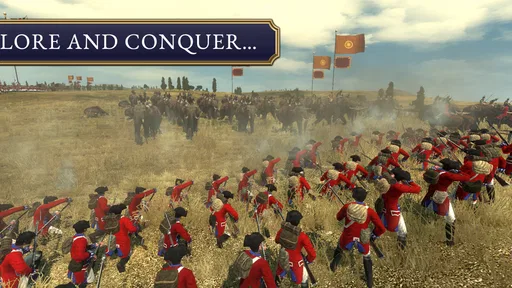
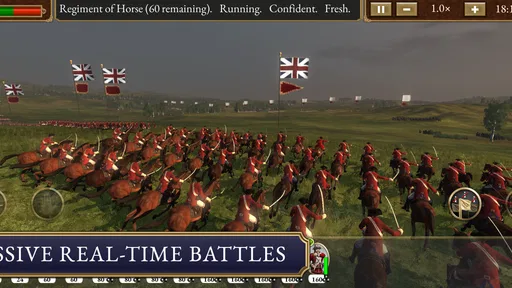
One of the first things that struck me about Total War: EMPIRE is its sheer scale. This isn't your average strategy game. It throws you right into the thick of things with massive battles that can have tens of thousands of units on the field. It's like playing chess, but each piece is a battalion ready to engage in an all-out war. The attention to detail in the units, from the uniforms to the formations, adds a layer of authenticity that’s truly immersive.
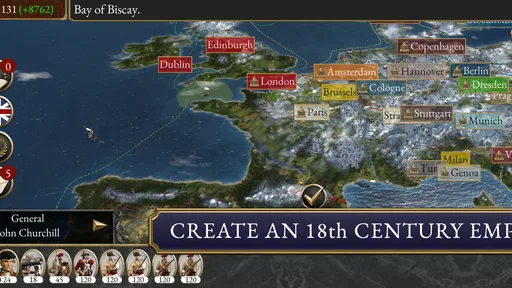
The game is set in the 18th century, a time of revolutions and empire-building. You can choose from several factions, each with unique strengths and weaknesses. Whether you're leading the British Empire, the Ottoman Empire, or another great power, the game gives you the freedom to pursue your own goals, be it military dominance, economic prosperity, or diplomatic finesse.
Strategic Depth and Mechanics
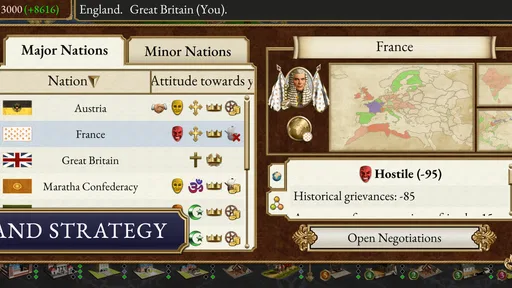
What I love about this strategy game is the depth of its strategic elements. The game seamlessly combines turn-based strategy with real-time tactics. On the campaign map, you make decisions about diplomacy, trade, and technology development. Each of these elements is interconnected, meaning a misstep in one area can have ripple effects across your empire.
The real-time battles are where the game truly shines. You have to consider terrain, weather, and unit morale as you maneuver your troops. There's nothing quite like the satisfaction of executing a perfect flanking maneuver or holding a defensive line against overwhelming odds. The AI is challenging enough to keep things interesting, without being frustratingly difficult. It forces you to think on your feet and adapt to changing circumstances.
Visuals and Sound Design
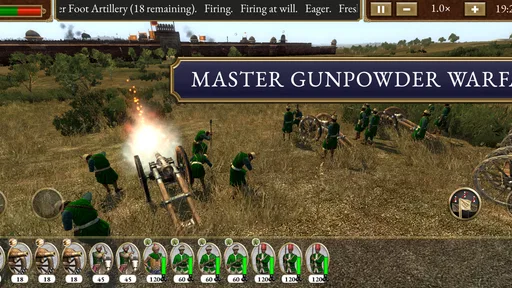
Visually, the game is impressive. The landscapes are beautifully rendered, and the attention to historical detail is commendable. Whether you're marching through lush forests or laying siege to a fortified city, the game does a fantastic job of bringing the 18th century to life. The sound design complements this perfectly, with the clash of swords, the rumble of cannon fire, and the stirring soundtrack all adding to the immersive experience.
For me, that presentation works best when I have time to follow what is happening rather than treating the action as background noise. The visual detail helps battles feel like more than abstract counters, while the sound gives movement and conflict a satisfying sense of weight. It supports the strategic decisions without replacing them: good atmosphere cannot rescue a poor plan, but it makes the consequences of a good one more memorable.
Challenges and Learning Curve
While the game is incredibly rewarding, it does come with a learning curve. Newcomers to the series might find the complexity a bit daunting at first. However, the game includes a comprehensive tutorial and plenty of in-game guidance to help you get up to speed. Once you get the hang of it, the game's complexity becomes one of its greatest strengths, offering a depth that keeps you coming back for more.
Another challenge is managing the vastness of your empire. As you expand, you'll need to keep an eye on everything from public order to economic stability. Neglecting one aspect can lead to revolts or financial ruin, adding a layer of tension that keeps you on your toes.
One trade-off worth keeping in mind is that growth can increase the amount you need to manage rather than simply making you stronger. I would pause before treating every opportunity to expand as an obvious win. A smaller, more manageable position can be preferable to taking on new responsibilities before your economy and public order are ready to support them. That restraint is a useful lesson for a first campaign, and it can make later successes feel earned rather than accidental.
Price, access, and the right expectations
The game costs $19.99, so I would approach it as a substantial strategy purchase rather than a casual free download. Its average rating is 4.3 from around 3.9K ratings, with 334 written reviews and over 50K installs. Those figures suggest an established mobile audience, but they do not tell me whether its long-form style will suit an individual player. The more important question is whether you want a campaign that rewards sustained attention.
It is rated Teen, and the current version is 1.7.1RC1. The minimum operating system requirement is 12. I would check that your device meets the requirement before buying, and consider whether you are comfortable with the cost for a game whose appeal depends on spending time learning its systems. In-app purchases are listed at $6.99 per item, so anyone budgeting carefully should take those potential extras into account as well as the initial price.
One question many players have is whether the game works for someone new to this kind of strategy. My answer is yes, if you are willing to learn at a measured pace and use the tutorial and in-game guidance rather than expecting to understand every system immediately. If you mainly want quick, self-contained battles, I would look at a more focused tactics game instead. Here, the campaign’s connected decisions are central to the experience, not optional background.
Final Thoughts
In conclusion, this is a must-play for fans of strategy games. Its blend of grand strategy and real-time tactics offers a rich, immersive experience that few games can match. While it may take some time to master, the payoff is well worth the effort. Whether you're a history buff or just a fan of epic battles, this game has something for everyone.
I would narrow that recommendation slightly: it is strongest for players who enjoy the management as much as the spectacle. If you want armies, diplomacy, and economic choices to feed into one another, I think the asking price can make sense for the depth on offer. If you prefer a short session with a clear endpoint, or dislike having to keep several campaign pressures in mind, the same breadth may feel like work rather than freedom.
If you're ready to embark on your journey of conquest and diplomacy, you can download it and start building your empire today. Just be prepared to lose track of time as you get sucked into this captivating world!
Verdict
Strengths of Total War: EMPIRE
- Stunning historical accuracy and detail.
- Wide variety of units and strategies.
- Engaging and expansive campaign mode.
- Impressive graphics for mobile devices.
- Multiplayer mode adds replayability.
Limitations of Total War: EMPIRE
- Requires high-performance device.
- Steep learning curve for newcomers.
- In-app purchases can be pricey.
- Occasional connectivity issues.
- Battery drain during long sessions.
Other Releases by Feral Interactive
View All
Hitman: Blood Money — Reprisal
Action4.3

GRID™ Autosport
Racing4.6

Total War: MEDIEVAL II
Strategy4.7

XCOM 2 Collection
Strategy4.2
Similar Picks in This Category
View All
Clash of Clans
Supercell4.5

Plants vs. Zombies™
ELECTRONIC ARTS3.7

Lords Mobile: Kingdom Wars
IGG.COM4.5

Clash Royale
Supercell4.4

State.io — Conquer the World
CASUAL AZUR GAMES4.1

Car Driving School : Car Games
Spark Game Studios3.9
Frequently Asked Questions
What is Total War: EMPIRE about?
Total War: EMPIRE is a strategy game that combines turn-based tactical planning with real-time battles. Set in the 18th century, it allows players to control powerful empires, manage resources, and engage in epic warfare. Players can explore a vast world map, build armies, and conquer territories to expand their empire.
What platforms is Total War: EMPIRE available on?
Total War: EMPIRE is primarily available on PC. However, it may be accessible on other platforms through specific services or emulation. For mobile gamers, keep an eye on any updates from the developers regarding potential mobile adaptations or similar experiences.
What are the main gameplay features of Total War: EMPIRE?
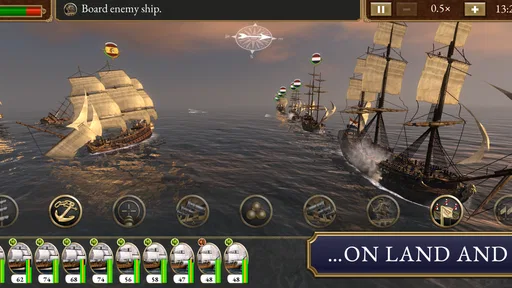
The game features a mix of turn-based and real-time strategy. Players manage economies, diplomacy, and military tactics on a grand scale. Naval battles, land warfare, and technological advancements are key aspects. The game's detailed campaign map allows for strategic planning, while real-time battles offer immersive combat experiences.
Is Total War: EMPIRE suitable for beginners?
While Total War: EMPIRE offers deep strategic gameplay, it may be challenging for beginners due to its complexity. However, tutorials and a gradual learning curve help new players understand the mechanics. Patience and practice are essential to mastering the intricate systems and strategies required to succeed.
Does Total War: EMPIRE require internet access to play?
Total War: EMPIRE can be played offline for its single-player campaign mode. However, internet access is required for any updates, patches, or multiplayer features. For the best experience, ensure your game is up-to-date with the latest enhancements and fixes from the developers.
Play our best games!


